
About Ronen Kanski, Melbourne Psychotherapist
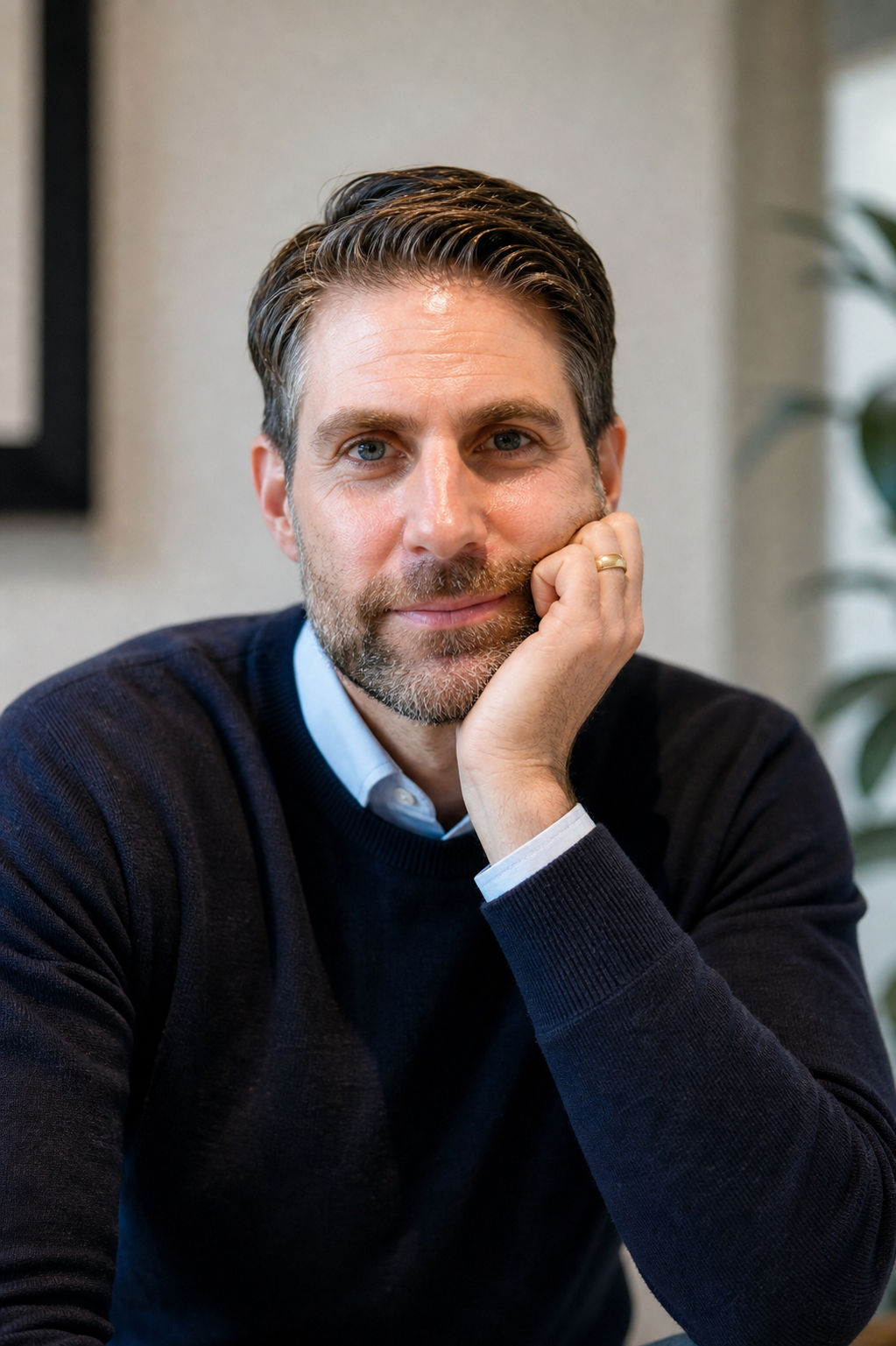
Psychotherapist & Group Therapist
I am a Melbourne psychotherapist and group therapist, working with adults, adolescents and young adults in both individual and group settings.
My therapeutic approach is informed by psychodynamic, relational and group-analytic thinking, with a particular interest in relationships, identity, trauma, belonging and life transitions.
I am interested in what happens both within us and between us – in relationships, families, groups, communities and organisations – and in the often unspoken emotional dynamics that shape how we experience ourselves and others.
How I Think About Therapy
I see therapy as a space for reflection, curiosity and emotional understanding. Rather than focusing only on symptoms or immediate solutions, I work collaboratively to explore patterns, relationships and experiences that may be difficult to understand or put into words.
Over time, experiences that have felt overwhelming, confusing or isolating can become more thinkable and understood. This can open up new ways of experiencing ourselves and relating to others.
Training & Background
I hold a Master of Counselling and Psychotherapy from the Australian College of Applied Professions (ACAP). I also hold a Bachelor’s degree in Psychology and a Master’s degree in Sociology, with a focus on migration and globalisation. In addition, I hold a Master’s degree in Management.
Alongside my academic qualifications, I have completed extensive professional training in psychotherapy. My training includes psychodynamic group work, psychoanalytic group work and group analysis. I have also trained in trauma-focused psychotherapy.
I am currently undertaking advanced training in group psychotherapy and group analysis. This training is through the Australian Association of Group Psychotherapists (AAGP).
The Meaning of Anaphase
Anaphase is a concept borrowed from biology. It describes a stage of cell division in which a single cell divides into two. As this process continues, the cells divide further. Over time, they form groups of interconnected cells that ultimately make up the human body.